

All good — and bad — things must come to an end.
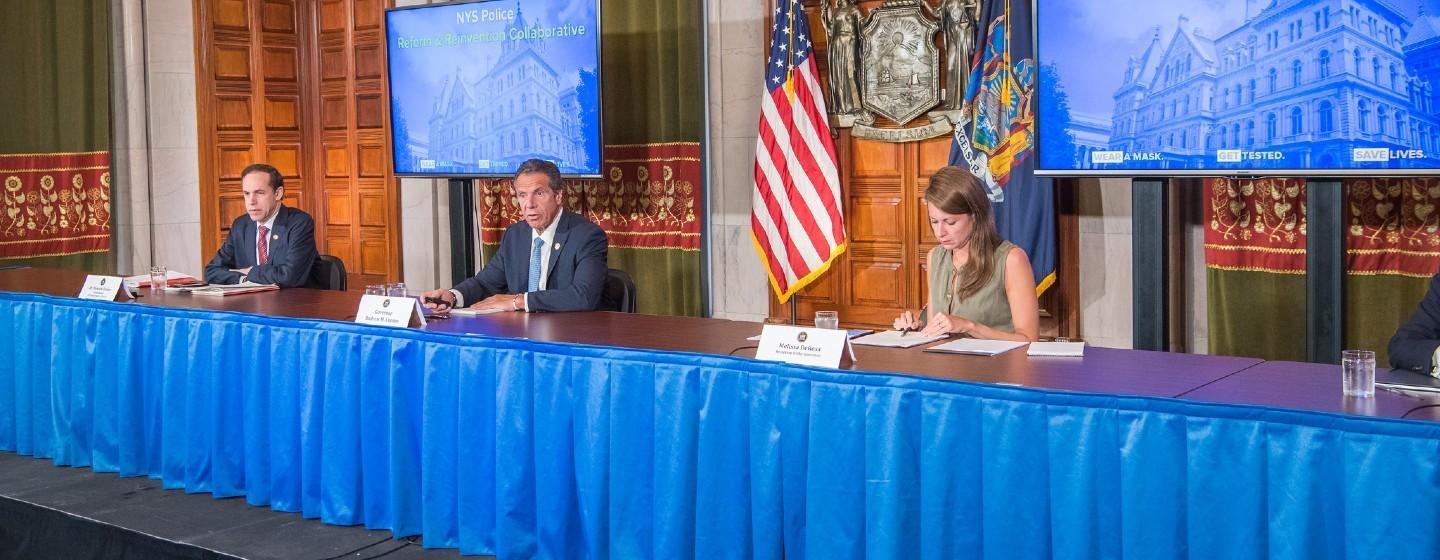
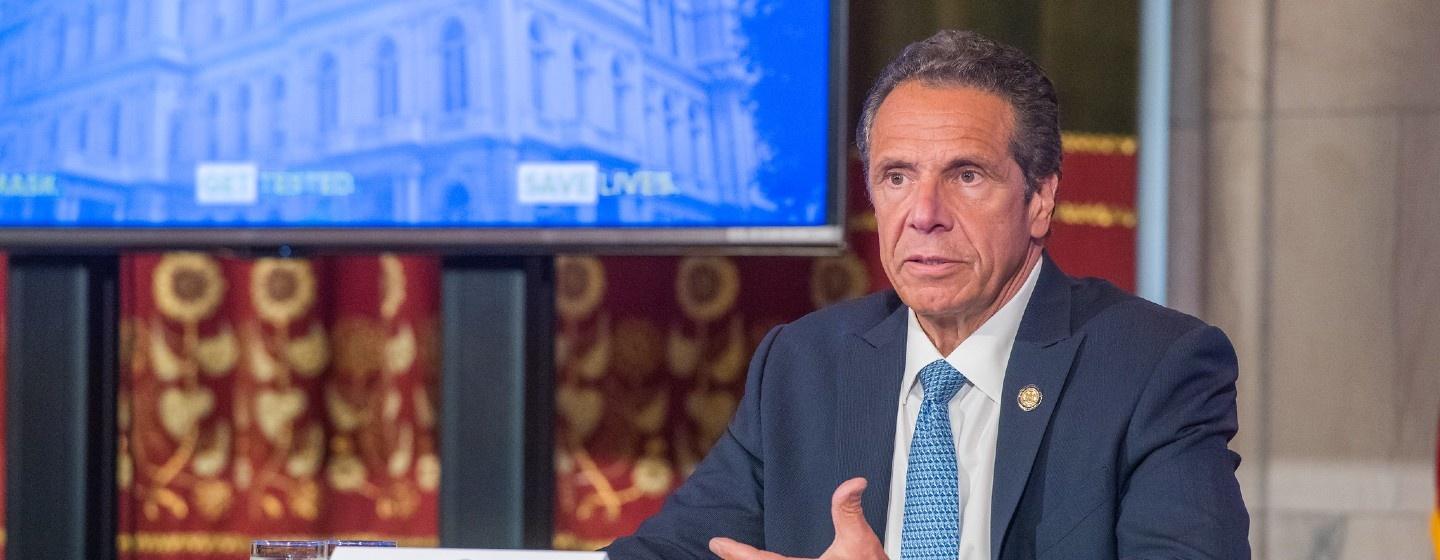
For Gov. Andrew Cuomo, that means an end to his daily briefings on the coronavirus, which has declined in New York in recent weeks. Cuomo said his last briefing will be held Friday.
“Now we're going to move on to other things,” Cuomo said Wednesday. “These daily briefings, while fun, take a lot of time and I’m going to finish the daily briefings on Friday, and then we’ll do briefings as necessary, and I’m sure they will often be necessary.”
“But we’re going to turn the page on the immediacy of this crisis. I hope people learn from what we’ve accomplished here in New York.”
Cuomo has given a daily update on COVID-19, in some form, nearly every day since the beginning of March, when the first case of the disease was diagnosed in New York.
In recent weeks, those updates have included relatively positive news: new infections, hospitalizations, and daily deaths from the disease have all declined. Only 17 people died Tuesday. That’s compared to 800 at the peak in April.
But there were times when the briefings were grim, and hope seemed far off.
Early on in the COVID-19 crisis, New York state was scrambling to find enough ventilators for the projected number of patients who would need them at any given time. Models had predicted 30,000 ventilators would be needed, along with 110,000 hospital beds.
Cuomo, during those times, warned that New York was having trouble finding ventilators to buy because every state in the nation, along with other countries, were all competing for the machines. He called on the federal government for help and, at times, it delivered.
Hospitals in New York were ultimately able to increase the number of beds available for COVID-19 patients to meet the demand. The federal government sent a naval ship to serve as a temporary hospital, and helped the state build other temporary hospitals on land.
New York transformed facilities into make-shift hospitals. The Javits Center, an event space, was transformed into a treatment facility.
Cuomo, during his time as governor, has consistently referred back to a common phrase ahead of a crisis: prepare for the worst, and hope for the best.
That’s what New York did, but the worst didn’t come. At the height of the disease, less than 10,000 people required a ventilator. Fewer than 30,000 patients were hospitalized at once. And hospitals were still overwhelmed in some areas of the state, mostly New York City.
But, at the same time, New York instituted a series of orders that required most businesses to end in-person operations. That meant they could either allow their employees to work from home or, in other cases, lay them off.
Residents were advised to stay home unless they absolutely needed to travel somewhere, like the grocery store. Orders banning gatherings of any size and requiring people to wear masks were also implemented.
Cuomo has largely credited those measures for turning the page on COVID-19 in New York. A state that had prepared for a far-worse outbreak had single-handedly “bent the curve,” Cuomo said at a briefing in recent weeks.
It’s possible, and some say probable, that a second wave of the virus will hit New York in the future, but for now, the data appears to be headed in the right directions.
As of Tuesday, fewer than 1,500 people were still hospitalized with the disease. Of those, only about 300 still require treatment with a ventilator. More than 69,000 people have been discharged from the hospital since the first diagnosis.
More than 24,600 people have died from the disease in New York.