Assemblyman Ed Ra Discusses State Budget, Housing and Infrastructure



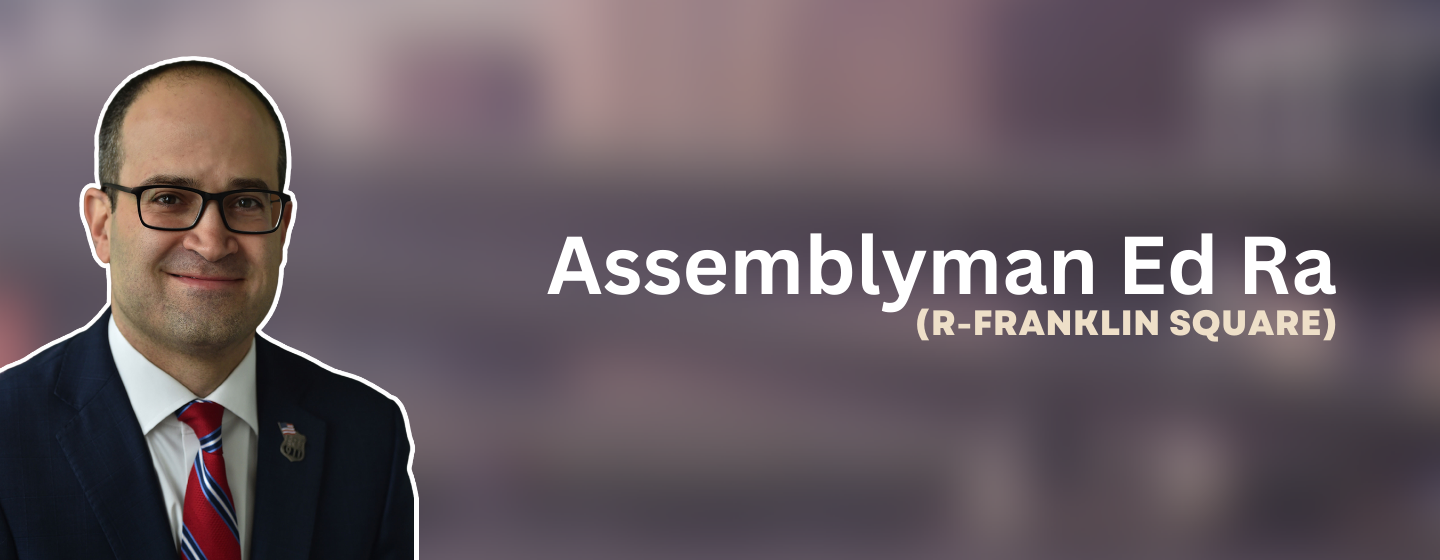

Dan Clark: If you were with us last week, you'll know that Assembly Speaker Carl Heastie joined us to chat about what Democrats in his chamber want to see in the budget. So this week, we wanted to bring you another perspective, this time from the other side of the aisle.
Assembly Member Ed Ra is the highest-ranking Republican on the Assembly Ways and Means Committee, the main committee involved in the budget. We spoke this week about this year's state budget, what Republicans want, and more.
Assembly Member Ra, thank you so much for being here, I appreciate it.
Ed Ra: Thanks Dan.
Dan Clark: Of course.
Let's start with housing. You're from Long Island, you represent a district on Long Island where the governor's housing proposal has left a lot of people upset. Just to recap for our audience, she wants to build 800,000 new homes over the next decade, but the catch is one part of her proposal would allow developers to override local zoning laws to get it done if that locality is lagging behind its housing goals. Tell me what you're hearing on Long Island about that.
ER: Yeah, so just the concept of overriding local zoning is causing a lot of opposition, but really on top of that, it's been the transit-oriented development piece of it that also mandates a half mile radius around every Long Island Railroad Station be rezoned to allow for 50 units per acre. So, to put that into context, I believe we have something like 50 stations in Nassau County.
I have 16 in or adjacent to my district alone, and it's a level of density that really you're not going to find anywhere in Nassau County currently. So, it brings up a lot of concerns about water, roads, sewers and all of the services that that our residents count on.
DC: I don't want to misrepresent your position, it's not that you don't want more housing necessarily, you just don't think that this is the way to get it done.
ER: Yeah, correct. I think that trying to diversify our housing stock is important. A lot of villages have done some innovative things, whether it's in their downtowns, but have found ways to make it fit within their communities. So that's one of the really most difficult things about the transit-oriented development piece is there are train stations that, you know, maybe there is opportunity for housing there and there's other ones that are surrounded on all sides, that entire half mile is going to be currently single family homes, and there's really no space there to put a large building.
DC: So, the Democrats actually came out with their one-house budgets last week and actually pushed back on that zoning override, part of the governor's proposal, saying that they instead want to offer incentives for new housing. So rather than kind of require it, rather than having it be a mandate, they want to incentivize that. What do you think of that?
Is that a better way to do it, or do you see a better way to grow housing in places like Long Island?
ER: I think that's a better way to do it. You know, it's more of a carrot rather than a stick approach, but I think one of the most important pieces of it of it would be having real infrastructure dollars behind it. You know, the governor's proposal has $250 million statewide for infrastructure. That's going to be a drop in the bucket. It's going to take a lot more than that to make, frankly, this type of housing viable in a lot of places that don't have sewers. You know, how do you build a multi-level apartment building without sewers? What impact does that have on the environment locally?
So, I think the infrastructure dollars would go a long way towards maybe allowing some municipalities to be a little more innovative.
DC: Speaking of infrastructure, there's also a proposal in this year's state budget which the governor and Democrats in the legislature are kind of agreed on, kind of not agreed on, it's the gas ban in new construction. I know that's been an issue in areas of the state like North Country and Cattaraugus County in particular, where you have these rural areas that are concerned that if you cut off gas, then if there's an emergency, they might not be able to, you know, cook food and heat their homes.
Do you have those same concerns down in Long Island as well? I would assume that's something that would probably not sit well with local leaders there, too.
ER: Yeah, I do. When we talk about moving towards getting more green, I think too often we do it with tunnel vision without making sure it's really a feasible thing. Natural gas, I think, has become a really important part of moving away from much less clean sources of energy over the years.
I still to this day have constituents always looking to make those conversions. So, banning it for new construction, I think, is going to… you know, when you go back to the housing bill, if you're if there are less viable ways of heating these buildings and allowing the residents to cook and all that other stuff, it makes that even more to have development.
DC: Republicans have also pushed back on this budget, saying that both the governor's budget and what Democrats proposed in their one-house budget last week didn't include enough on this big issue in New York right now of cost of living.
It's no secret to anybody who doesn't have enough money to put food on the table, that you really can't afford to live here a lot of the time anymore. What do you think is the solution there, if you were to put a proposal into the budget this year?
ER: Well, we came out with a proposal last year, you know, that included the gas taxes, but also basically included a sales tax moratorium on kind of those everyday items that people need, personal care items, things like that that people are buying on a regular basis to help just with the inflation because as you know, when the cost of things goes up, the state almost is getting a windfall because the sales tax as a percentage. So if something doubles in price, the state's making that much more on the sales tax on that particular item.
So, I think a proposal like that could really help people until some of these costs start to come back down on those everyday essential items.
DC: Right. I mean, even outside of inflation, the cost of living in New York has been going up for a number of years. We've seen in the past decade a lot of people move out of the state and some people will say it's the cost of living. Other people will joke and say it's the weather, but when it comes down to it, we don't know what each individual person is doing necessarily.
We talk about the state budget as this spending and fiscal document and we like to put money into it and kind of take policy out of it, but you do have two months of session left after the budget. Is there anything that maybe the legislature could do on cost of living and affordability outside of the budget, you think, or do you think that's a conversation best left in the spending plan?
ER: I think there are things we could do outside of the budget, but anything that's going to be some type of tax break, or sales tax moratorium, or anything of that nature is going to have dollars associated with it. So that is best left within the budget. But outside the budget, we can talk perhaps about things like mandates that drive local property taxes up.
We've done some decent mandate relief over the years with regard to Medicaid, but, for example, we have in this budget this potential share of Medicaid dollars on to our counties that could cause huge tax increases to our property-taxpayers. So, not just trying to move forward, we're trying to make it cheaper, but fighting against proposals like that, that would have a negative impact as well.
DC: Before we run out of time, I want to turn to the governor's crime proposals and how the Democrats in the legislature have kind of responded to it, and it's a little wonky. So, I'm hoping that our viewers have read up on this. The governor is proposing to take out the words least restrictive means on bail eligible offenses when somebody heads to court for their pretrial decision from the judge.
I know it's sort of wonky, but the governor says it will allow judges to hold more people in jail before their trial based on some factors that they could look at. I know that your conference says that that is a good start. What else would you like to see? Are we still at the point where you'd like to see just a full repeal and start over, or do you think maybe this is something that you do it in this budget, the least restrictive means part and maybe follow up on it later?
ER: I think the least restrictive mean part, the thing to remember is it has to be a bailout eligible offense. So, you're still dealing with that situation that it's either on the list or not. We always have these cases where something happens and then they say, oh, this wasn't bail eligible. So, I think the real key to it would be actually doing the dangerousness standard.
I think at the end of the day, it's going to be a small number of people that are coming in and out of court on a regular basis. So, the judge can just evaluate that defendant, their history, and if they are posing a threat to public safety, keep them in jail as opposed to having their hands tied like they do now.
DC: All right, Assembly Ways and Means Ranker Ed Ra, thank you so much for joining us this week. I appreciate it.
ER: Thank you Dan.
DC: A reminder that the state budget is due on the 31st.
Watch the Interview
Assm. Ed Ra gives his perspective on the state budget, housing, infrastructure, and more.