NYNOW Intern Project: Examining Childcare Funding For NY Communities



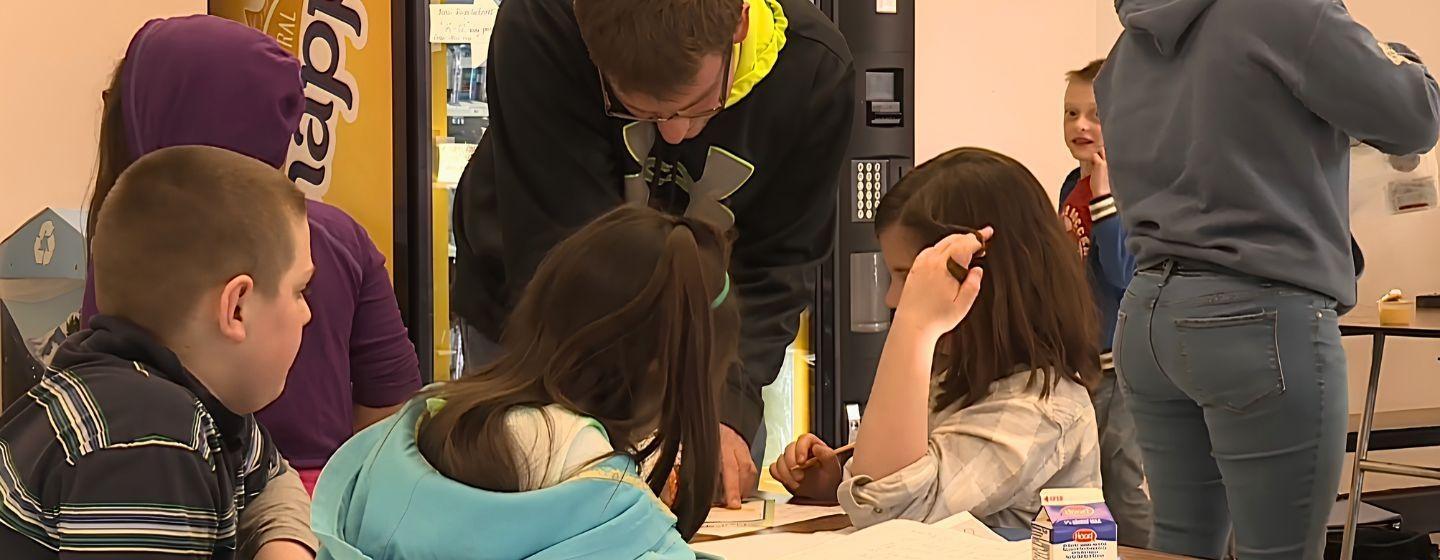
New York NOW Internship Project: Examining Childcare Funding in Rensselaer County
Childcare Funding Challenges in Rensselaer County
Video Transcript (lightly edited for accuracy)
Jordyn Miller:
Federal and state funding issues have led to widespread challenges for childcare programs and communities across New York State. Locally, in Rensselaer County, the lack of funding has led to staffing and resource shortages for afterschool and childcare programs in the community.
Rensselaer County was allocated $8.5 million for the 2025–2026 cycle, but community members urge that it was not enough. With limited funding, families are required to pay out of pocket, leaving them with reduced access to affordable childcare. The county stopped accepting applications on November 1, 2025.
In response to this ongoing crisis, State Senator Jacob Ashby, a Republican who represents Rensselaer County in the Legislature, has introduced a bill that would provide onsite childcare within each state office across New York in an effort to provide support to state workers.
State Senator Jacob Ashby:
You know, for many of us, the start of the conversation begins with, you know, “my childcare bill is more than my mortgage,” right?
And then it’ll turn into, you know, they’re losing staff at an unbelievable rate. And then the next part is, “we’re looking for another place.”
And the smaller home-based childcare businesses that we’ve talked to, they’re facing a lot of regulatory hurdles, the same staffing issues that some of the larger companies have as well. So it’s very universal in terms of its demand, which is why I think it demands a comprehensive response.
Jordyn Miller:
State Senator Ashby’s bill calls for a childcare expansion program within the Office of General Services. This is the first year that the bill was introduced in the Legislature, and it is currently being reviewed by the Senate committee.
State Senator Jacob Ashby:
I think it’s something that both parties can come together on.
It would allow OGS the ability to contract out for childcare for state employees or agencies that have more than 100 employees. And there’s a lot of freedom in their ability to do that.
But in this business environment, sometimes that’s hard. And this would provide certainly the tax relief, or a lesser tax burden on that, and the space and potentially the personnel as well.
Jordyn Miller:
According to a 2023 Rensselaer County community needs assessment report from the Commission on Economic Opportunity for the Greater Capital Region, Rensselaer County has a shortage of childcare centers, with 64% of households living in a childcare desert.
In addition, the average cost of childcare for each child is $15,394 per year, making this an unaffordable cost for many households.
The lack of funding in communities like Albany and Rensselaer heavily impacts the amount of available childcare slots.
In New York, Assemblymember Sarah Clark, a Democrat who represents New York’s 136th District in the Legislature, says tackling the workforce decline in childcare is necessary in order to relieve the pressure on working families who are struggling to find available childcare.
Assemblymember Sarah Clark:
Even if we help every single family with childcare, if there’s not slots available, then it doesn’t solve anything.
And so, to ensure families are getting the help that they need and that they have a place to put their child are two of the most important things.
Jordyn Miller:
Quality childcare helps working families by allowing them safe and supervised arrangements for their children, allowing parents to work consistently.
Quality childcare and afterschool programs have also been known to have developmental benefits on children long term.
Assemblymember Clark says early childcare has a significant impact on preparedness to learn.
Assemblymember Sarah Clark:
I can firsthand say I saw it with my three children. Children who are in some preschooling settings before they walk into a school building are oftentimes much more ready for what a real school day looks like.
We also know that the first zero to three years of a child’s life is most critical in terms of their brain development, how quickly they’re absorbing things. And it really sets them on a path of being a better learner, or ready for the way we want children to be able to learn.
And so early childcare is many things, right? It’s the ability for families to provide for themselves, to have stable income, but it also makes a huge difference in a child’s life.
Jordyn Miller:
Beyond preschool and daycare, local afterschool programs are facing staffing shortages and insufficient funding.
Assemblymember John T. McDonald III, a Democrat who represents New York's 108th State Assembly district in the Legislature, says community-based organizations, as well as families, need to see support.
Assemblymember John T. McDonald III:
And by the way, we have a lot of not-for-profit entities like the Boys & Girls Club, like Hope Seven in Rensselaer County, that are struggling because they’re not able to continue on because they’ve been relying on these individuals being supported by the state.
So it’s a whole system. The whole childcare ecosystem includes a lot of our very strong not-for-profits.
Jordyn Miller:
Holly Cargill-Cramer, executive director of Hope Seven Community Center in Troy, also known as the East Side Neighborhood Recreation Center, says it’s been quite the challenge to continue serving her community under these circumstances.
Holly Cargill-Cramer:
We began to see letters from Rensselaer County warning us last fall that funding was going to run out, and then that beginning November 1, as our families would normally be coming up on a recertification, they would be told that they had to start the process all over again.
That they wouldn’t be able to just recertify at their current level. They would have to reapply to the program as if they had never been on it.
Jordyn Miller:
The executive director of Hope Seven also discussed the impact the lack of funding has had on Hope Seven enrollment and staffing.
The community center usually operates with about 40 children. Hope Seven currently has 18 children enrolled.
Holly Cargill-Cramer:
Our staffing level is at an artificially low ebb right now. Anyway, we are at base level, and we are at base level because of the number of children that we have.
But the fact of the matter is, I couldn’t take on additional children right now because I cannot pay the staff.
Jordyn Miller:
Afterschool programs are a crucial resource in benefiting older youth. Like early childcare programs, they increase academic enhancement, social-emotional development, and reduce safety risks.
State Senator Roxanne J. Persaud, a Democrat who represents Kings County, is proposing a new plan to eliminate as many obstacles as possible for families in her community.
The senator created a new bill that will be tested through a two-year pilot. The bill would employ youth and young adults through a year-round youth employment immersion program and help them build transferable work skills in the public, nonprofit, or private sector.
State Senator Roxanne J. Persaud:
But I have a bill that we’ve been working on to do year-round employment for youth across our state.
And so we’re looking at it. We’ve pared it down and said we’ll start, do a pilot, and then see how the pilot runs for two years as we look to expand on that.
And I think it will help a lot of youth come off of the streets because they’ll leave school, and then they’ll go to their place of employment, that they’ll be building a skill so that when they’re finished with high school, they have a skill that’s there.
Jordyn Miller:
The bill is currently in the Senate Finance Committee.
While the state budget is still being negotiated between state leaders, state lawmakers are integrating strategies to expand access to childcare and tackle the rising costs for families.
Assemblymember McDonald says he hopes for more flexibility and to see resources better allocated to help families by the end of this legislative session.
Assemblymember John T. McDonald III:
There’s $3.6 billion allocated in this budget to expand childcare.
I do believe it needs to be within the Office of Children and Family Services because we want to impact all families. Office of General Services makes sense for public employees, but it’s public employees and private employees that need the care.
So we’re trying to focus on making sure that we’re able to have some flexibility in actually moving that funding around from one county to the other, but also to improve both private and public sector employees.
Jordyn Miller:
Assemblymember Mary Beth Walsh, a Republican who represents New York’s 112th District, spoke about the Assembly Republican Conference’s ABC childcare plan.
The Affordable Blueprint for Childcare, or ABC plan, is a three-prong proposal that was proposed back in March of 2024. Assemblymember Walsh says that funding for childcare is a bipartisan issue.
Assemblymember Mary Beth Walsh:
You know, regardless of party, this is an issue that we all recognize. It’s just, I think that our approach on our side of the aisle is a little bit different.
So what the ABC plan would do is it would provide tax credits to families and providers. It would increase the state reimbursement rate for universal pre-K aid, and it would implement a substitute childcare database.
A portion of that plan was already adopted in the fiscal year 2026 enacted budget.
Jordyn Miller:
Although pieces of the ABC plan have been partially approved, Assemblymember Walsh and her colleagues are further examining barriers that prevent new childcare providers from being created.
Assemblymember Mary Beth Walsh:
I hear about that a lot, too, in my district, where I have childcare providers that are really having a hard time because they’re unable to maintain a steady workforce.
They’re running into a lot of government red tape in terms of being able to obtain insurance for their daycare center. They’re running into different kinds of problems.
So the ABC plan kind of looks at it not purely from a “let’s just continue to throw money at it.” I mean, that’s a portion of it, but it’s also how is that money going to get delivered to families.
We prefer to see it more in the form of a tax credit.
Jordyn Miller:
Assemblymember Clark and State Senator Persaud both spoke about expanding access to childcare through a consistent source of funds that is dedicated to childcare.
State Senator Roxanne J. Persaud:
We have not gotten to the point yet where we can fully fund it. And as we’re doing our budget right now, those are some of the conversations we’re continuing to have as to, you know, what is the need that’s there? How do we fund that need? And how do we continue the funding?
It’s not ad hoc. It’s not one-off funding. We have to make sure the funding stream continues.
Assemblymember Sarah Clark:
If we’re going to fully fund childcare to make sure that even just now, under our current eligibility standards, every family who is eligible receives the childcare money that they are eligible for, we have to put a lot more money into the system.
And to do that, we can’t continue to just keep from the general fund. We have to figure out a path forward on a dedicated revenue stream that is just for childcare.
Jordyn Miller:
Assemblymember Clark is proposing a bill that would help create a statewide childcare fund if enacted.
The bill would ensure funding is consistent across counties, while still supporting local services to help families access care, offering a contrasting approach to State Senator Ashby’s plan.
Assemblymember Sarah Clark:
The ultimate goal is what my bill will do, which is sweep all the money into a childcare fund that is run by the state.
And then counties can still be the front door. We can give them some admin costs to make sure that we’re paying for their staff, and then they can still work with families to make them eligible, but that the money actually just comes from a statewide fund.
There is no reason in our state that childcare should depend by which county you live in.
Jordyn Miller:
Governor Hochul’s statewide childcare expansion program and universal childcare plan aims to provide free or affordable high-quality childcare for all children under five and ease the financial burden for families all around New York State.
At this time, the governor’s $4.5 billion proposed childcare plan is included in the state budget. Currently under negotiations, impacted families, service providers and advocates await state budget updates in hopes that the intended allocations improve affordability for New Yorkers.
Holly Cargill-Cramer:
Every organization that I know of that does the kind of work that these organizations do are desperately in need of unrestricted funds to help their operations.
Targeted funds to help the daycare programs are also appreciated, but those who are able and have funding to help these afterschool programs are in crisis, and the parents that need them are in crisis.
That crisis is not a short-term crisis.
Jordyn Miller:
While budget negotiations are still delayed at the state Capitol, it’s unclear whether or not the bill will make it over the finish line.
Lawmakers and supporters tell me they will continue to garner support for the bill, as well as the Rensselaer community.
We’ll continue to bring you updates on this policy issue as they develop.
For New York NOW, I’m Jordyn Miller.