

Both leaders in the state Legislature said Wednesday that the economic recovery following the coronavirus pandemic will largely depend on what the federal government does down the line, rather than any action that could be taken at the state level.
The federal government has already suggested it may seek a major stimulus package — partly through direct payments to consumers — but hasn’t laid out a long-term plan, as of yet.
Senate Majority Leader Andrea Stewart-Cousins, D-Westchester, and Assembly Speaker Carl Heastie, D-Bronx, both said raising taxes on the ultra-wealthy, and other measures that could raise revenue, wouldn’t be nearly enough to fill New York’s financial gap from the disease.
They were both in Albany Wednesday with members to vote on legislation that will guarantee job security and paid sick leave for individuals affected by the coronavirus.
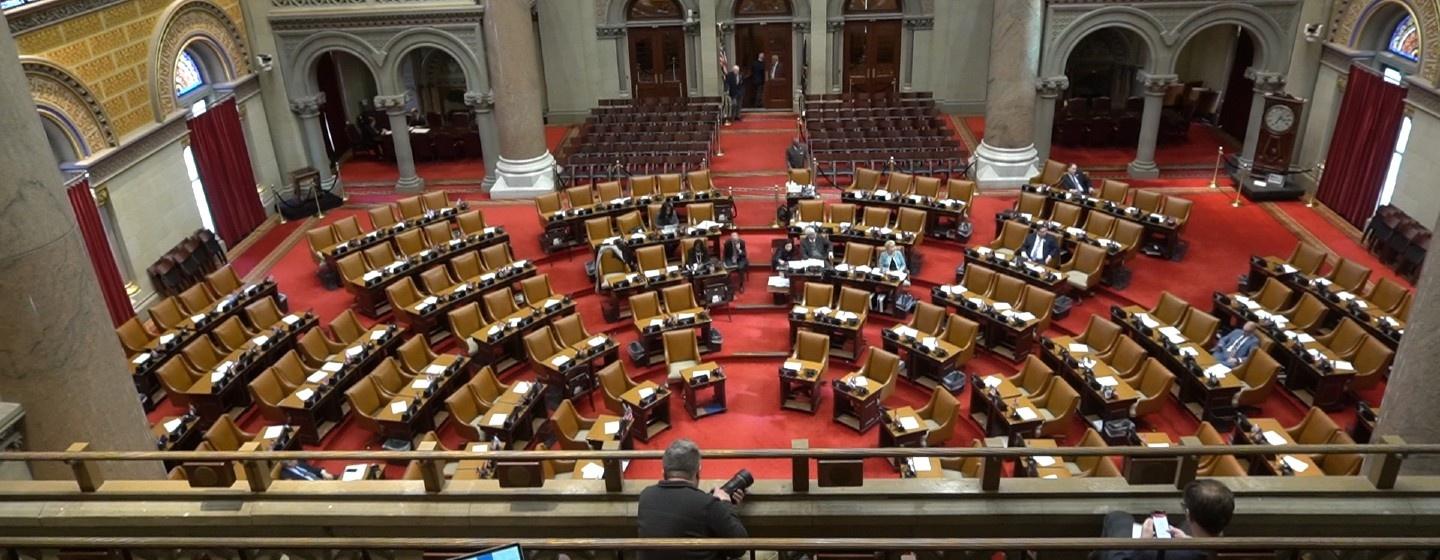
It was an eery day at the state capitol, which is usually packed this time of year with lobbyists, lawmakers, advocates, and staff. The state budget, which is due at the end of March, usually attracts stakeholders from every part of the state.
But this year is different. Only lawmakers, their staff, and members of the press are allowed in the capitol, as of now.
Lawmakers voted on legislation remotely, from their offices in the Legislative Office Building, which is directly adjacent to the state capitol. Party leaders in each chamber, and a few members, were physically present to debate the legislation and tally the votes.
That was to prevent the spread of the coronavirus through the Legislature, which has already reported two positive cases of the disease.
The timing couldn’t be worse. Lawmakers are negotiating a roughly $178 billion state budget, which was expected to also include several big-ticket items, like the legalization of marijuana and changes to the state’s new laws on cash bail.
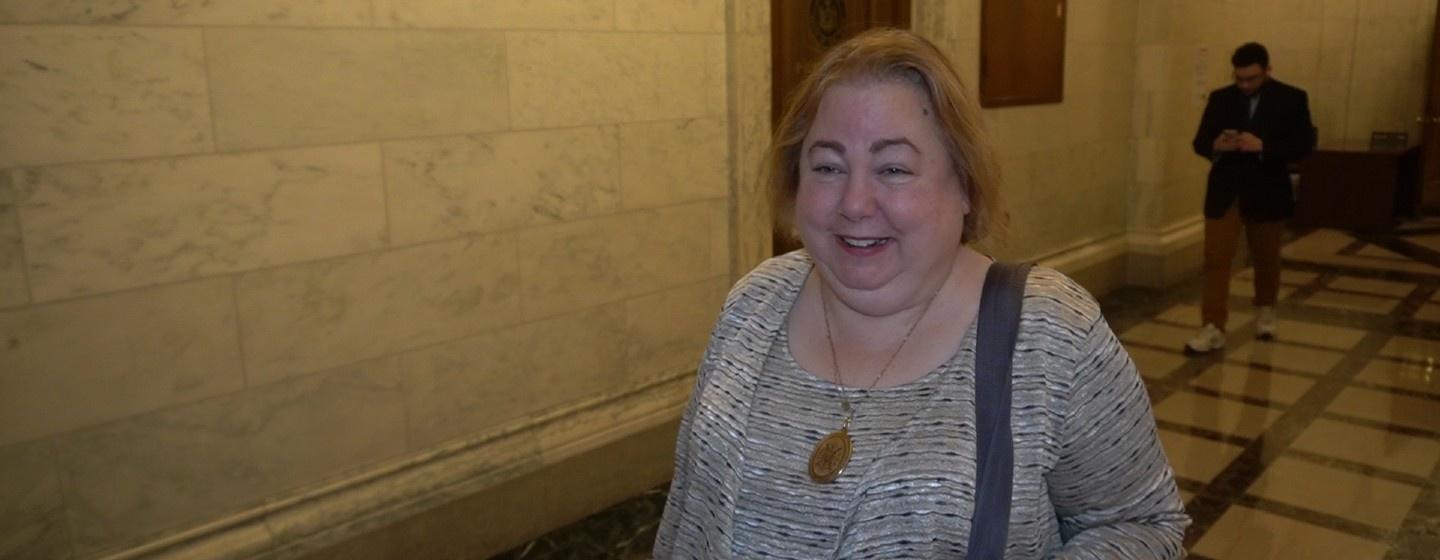
State Sen. Liz Krueger, D-Manhattan, said Wednesday it was likely that marijuana legalization would fall out of the state budget, calling a deal on the issue “unrealistic” given the current situation regarding the coronavirus.
There were rumors, earlier this week, that the Legislature would come back to Albany and approve a spending plan by the end of the week. Krueger said that may not be possible, but that lawmakers wanted to approve a budget ahead of the April 1 deadline.
“I think it’s everyone's desire to get the budget done as quickly as possible because of concern that people are needed in their home districts to be helping with things and the concern about being in groups,” Krueger said.
“I don’t know if it can actually get done by the weekend,” she continued.
Gov. Andrew Cuomo, speaking to reporters early Wednesday, said he would welcome a budget passed before the end of the month, but that he wasn’t pushing for the spending plan to be finished sooner. He’ll be in Albany regardless, he said.
“If they want to do it sooner, great. But the date is April 1. I’m going to be here, government is functioning,” Cuomo said. “This is public service. We’ll be here, we’ll be doing our job. If they want to come up and do the budget early, fine. Otherwise, the date is April 1.”
Heastie said there have been no final decisions about what will be included in the budget, and what the spending plan will look like. Much of that will depend on what they predict will coming from the federal government, he said.
Comptroller Thomas DiNapoli, this week, said the coronavirus pandemic could mean as much as $7 billion in lost revenue for New York. They’ll have to consider that, Heastie said.
“We really have to get a sense of what the federal government is going to do. As we go forward, taking a $4 billion to $7 billion hit, the volatility of the stock market is a concern,” Heastie said. “We have to take all these things into concern. So, I really think the federal government has to step in.”
Heastie said he’s already been speaking to members of Congress from New York about the financial hit to the state, and warned that the country could enter a depression if there’s not a significant infusion of cash from the federal government.
“If we don’t do something that continues the circulation of money into the national economy and here in New York state, we’re going to be headed for not only a recession, but maybe a total depression.”
Stewart-Cousins, speaking to reporters after the Senate left for the day, said the same. She said actions taken by the state wouldn’t be enough to cure the damage done by the coronavirus.
“I’m looking at billions of dollars of deficits and, frankly, we all know it has to be a national bail out here,” Stewart-Cousins said. “It has to be a national effort that has to be impactful for all of us. So I think that’s the most reasonable thing to consider.”
Neither Heastie nor Stewart-Cousins said tax raises on the ultra-wealthy were still on the table, but Cuomo appeared hesitant to embrace any new revenue-raising measures Wednesday morning.
“You have businesses closing, you have people out of work,” Cuomo said. “I don’t think now is the time to tell people we’re going to raise your taxes.”
It’s unclear when lawmakers will return to the capitol, but it’s likely that members will be told to stay home until they have a deal on the state budget. They’re scheduled for session each weekday next week.