

New York is losing out on approximately $600 million in federal funding related to Medicaid this year, and $8 billion in the long-term, after the federal government decided last week to reject a request from the state for those funds.
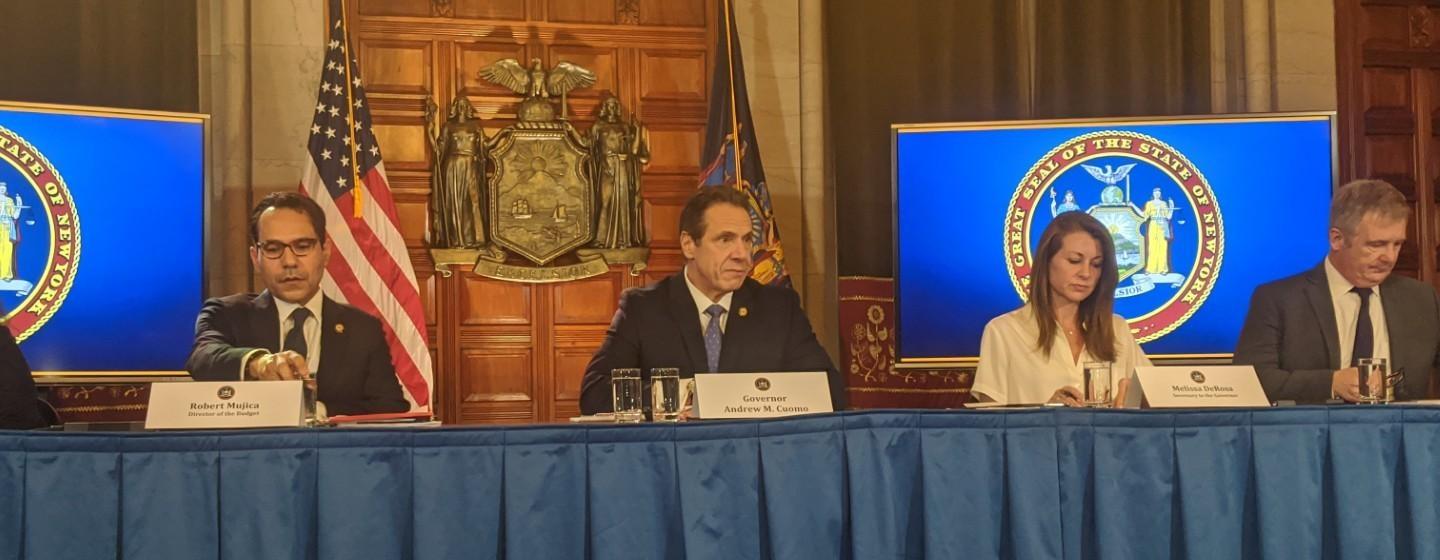
Gov. Andrew Cuomo claimed Monday that the decision was a result of the Trump administration’s political differences with Democrats in New York state.
“In and of itself, it is very counterproductive and hurtful to the state, but when you view it in the series of events that are going on, it’s even more disturbing,” Cuomo said. “There is a continuing pattern and series of these actions.”
He then bemoaned a series of decisions from the federal government related to New York state, including the Trump administration’s recent decision to block New Yorkers from reapplying to trusted traveler programs, which enable easier re-entry into the country after traveling.
It’s unclear how the federal government’s latest decision will play into this year’s state budget, which is already facing a projected $6.1 billion deficit.
Cuomo, in January, created a panel of experts to identify $2.5 billion in savings in the Medicaid program to help avoid that deficit. Those findings are due in March. State Budget Director Robert Mujica said that plan won’t change in response to the new loss of funds.
“It doesn’t change the target for our reductions, but it does affect all these same providers,” Mujica said.
Representatives from the Centers for Medicare and Medicaid Services said Monday that its decision, sent to the state Friday, did not stray from its original agreement with New York over the funding, which would have been spent on the state’s Delivery System Reform Incentive Program, or DSRIP.
It would have been another phase of funding on top of an initial $8 billion that was approved for New York state by the federal government for DSRIP. That initial funding was approved in 2014 to help create a plan for Medicaid savings by weaning off expensive emergency room visits.